PX1 / 10 mg
MOTS-c
A mitochondrial-derived peptide studied in cellular metabolic signaling.
For research use only. Not intended for human use.
The research information on this page describes published studies about the molecule and does not demonstrate the effect, safety, purity, or quality of PX1Labs' research material.
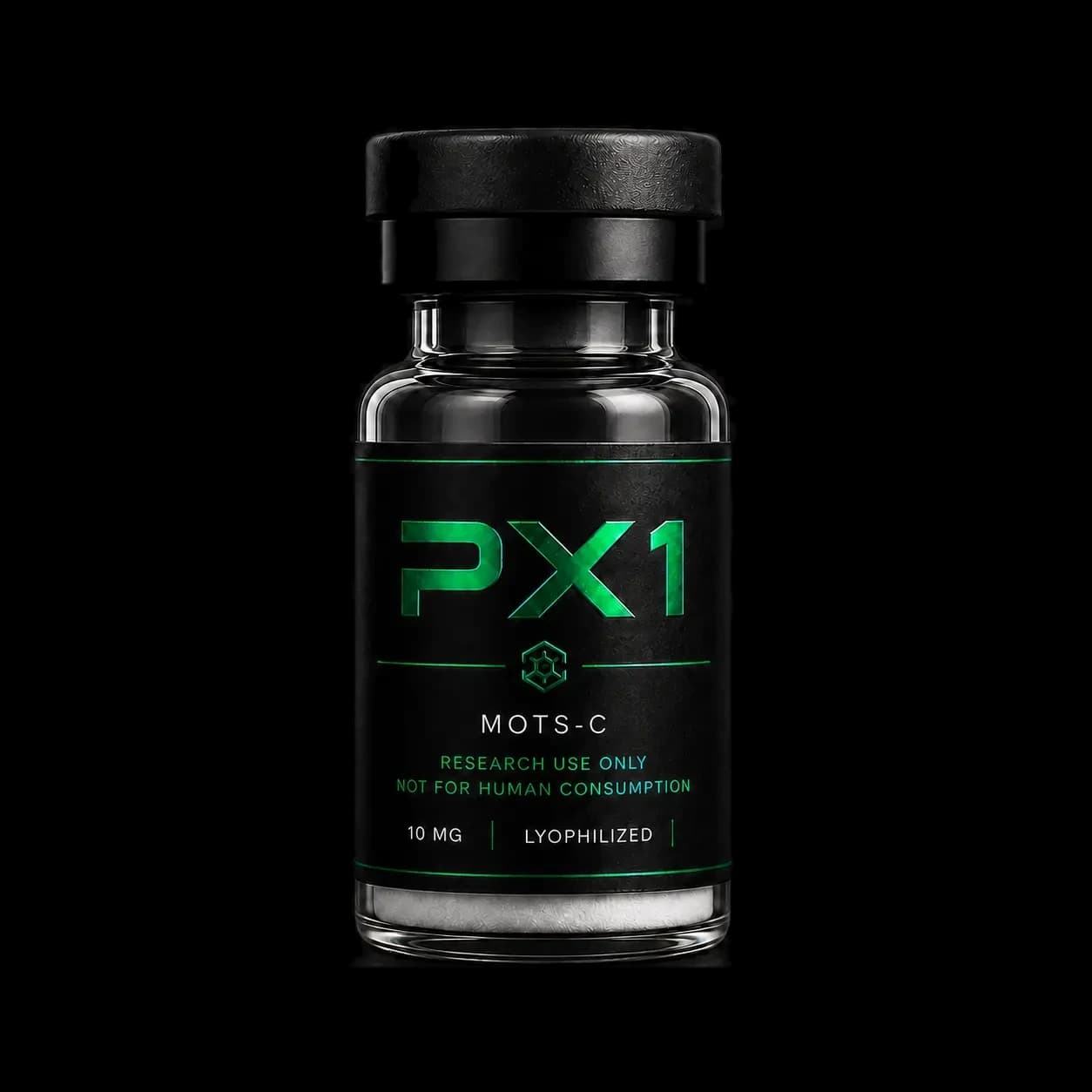 PX1 MOTS-c 10 mg
01
What is it?
10 mgMOTS-c is a 16-amino-acid peptide encoded within the mitochondrial genome.
02
What is being studied?
- 01
Cellular metabolic signaling
- 02
Preclinical models of muscle and energy use
- 03
How laboratory findings translate to humans
Scientific overview
MOTS-c: molecule, research fields and evidence boundaries
MOTS-c is a 16-amino-acid peptide encoded within the mitochondrial genome. A mitochondrial-derived peptide studied in cellular metabolic signaling. The overview below separates mechanistic, preclinical and human evidence from properties of a specific PX1Labs vial.
What the literature examines
Evidence focus · Important boundary
- Research field
- 01
- Evidence focus
- Cellular metabolic signaling
- Important boundary
- A research-model result does not establish clinical effect or properties of a specific vial.
- Research field
- 02
- Evidence focus
- Preclinical models of muscle and energy use
- Important boundary
- A research-model result does not establish clinical effect or properties of a specific vial.
- Research field
- 03
- Evidence focus
- How laboratory findings translate to humans
- Important boundary
- A research-model result does not establish clinical effect or properties of a specific vial.
Profile highlights
- investigational molecule status
- Research peptide
- amount stated on the vial
- 10 mg
- clinical transferability depends on study type
- Limited
Source and evidence map
Evidence type · Context · Inference limit
- Source
- MOTS-c discovery study — PubMed
- Evidence type
- Published source
- Context
- The original source defines its methods and studied material.
- Inference limit
- Does not verify identity, purity or effect of a PX1Labs vial.
Evidence-level distinction
What it can show · Product link · Boundary
- Level
- Cell/laboratory model
- What it can show
- Mechanistic signal
- Product link
- Indirect
- Boundary
- Does not establish clinical effect
- Level
- Animal model
- What it can show
- Preclinical outcome
- Product link
- Indirect
- Boundary
- Not human evidence
- Level
- Human evidence
- What it can show
- Observation or clinical study
- Product link
- Molecule-specific
- Boundary
- Does not verify vial quality
Evidence levels are not interchangeable. A finding about a molecule does not establish the identity, purity or effect of a specific research material.
Scientific and regulatory boundary
Much of the mechanism and effect evidence comes from cell and animal studies; it does not establish a clinical effect in humans.
03
What to keep in mind
Much of the mechanism and effect evidence comes from cell and animal studies; it does not establish a clinical effect in humans.
Read the sources